Newsletter Subscribe
Enter your email address below and subscribe to our newsletter
Enter your email address below and subscribe to our newsletter

 ByJohn A
Layer 2 blockchain solutions operate atop a Layer 1 to boost throughput and efficiency without altering the base consensus. They use rollups, state channels, and sidechains to process transactions off-chain or in compressed forms, then settle results on Layer 1. These designs trade certain security assumptions and data availability for performance gains. Understanding the varying security models, costs, and use cases is essential before choosing an approach. The implications for developers and operators become clearer as the options are examined.
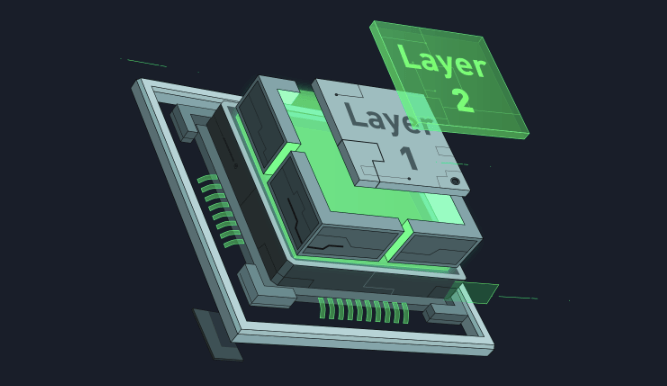
Layer 2 refers to secondary protocols or networks built atop an existing blockchain (the Layer 1) to improve scalability, throughput, and efficiency without altering the underlying consensus. Layer 2 basics emphasize modular design and interoperability, enabling faster transactions and reduced fees. However, efficiency often entails tradeoffs; scalability tradeoffs may include complexity, security considerations, and eventual reliance on Layer 1 finality for dispute resolution.
Rollups, state channels, and sidechains constitute the core modalities for scaling Layer 2 networks. These mechanisms trade-offs define throughput, finality, and trust assumptions, enabling scalable computation and settlement.
Rollups contrast optimistic and zero-knowledge proofs, while state channels lock state for off-chain interactions.
Sidechains interoperability enables independent ecosystems with distinct validation models, yet bridging risks and security incentives remain crucial.
Evaluating Layer 2 solutions requires a rigorous comparison of security models, operational costs, and throughput characteristics to reveal how scaling trade-offs impact overall system resilience.
The analysis emphasizes scalability governance, delineating attack surfaces, fraud proofs, and validator incentives across networks.
Trade-offs emerge between throughput gains, cross chain security assurances, and cost efficiency, guiding governance choices for robust, interoperable Layer 2 ecosystems.
See also: What Are Governance Tokens in DeFi?
Real-world deployments of Layer 2 technologies demonstrate how scalability techniques translate into tangible outcomes across finance, supply chain, gaming, and decentralized applications.
These solutions emphasize data availability and streamlined developer tooling to accelerate integration.
Practical use cases include faster settlement, lower costs, and improved throughput, while modular architectures enable adaptable security postures and independent ecosystem growth for developers seeking freedom through interoperable, scalable infrastructure.
Layer 2 solutions act as scalable amplifiers for Layer 1, processing transactions off-chain or in compressed forms before settling on-chain. Rollups, state channels, and sidechains each trade latency, data availability, and security assumptions differently, shaping costs and throughput. Evaluating them requires weighing security models, fees, and finality guarantees. Real-world deployments—from payments to dApps—demonstrate improved performance with careful design. Think of Layer 2 as a high-speed bridge, tethering speed to the bedrock of Layer 1, while preserving overall trust.